Fansly AI Chat Analytics: measure chatters like sales reps.
Most agencies reply fast and hope. AI Chat Analytics shows which Fansly conversations drive revenue, which chatters close, and where every minute of response delay quietly cost you a PPV sale.
Start FreeMessage revenue, response speed, chatter performance — one dashboard.
From roster-wide Fansly chat KPIs down to individual message forensics. The metrics top agencies use to turn conversations into measurable, repeatable revenue.
Messages Overview Dashboard
Total messages, paid-message revenue, new-fan engagement rate, media sent, conversion rate, average response time, tip trends. Seven KPIs that tell you whether your chat operation is printing money or burning chatter hours.
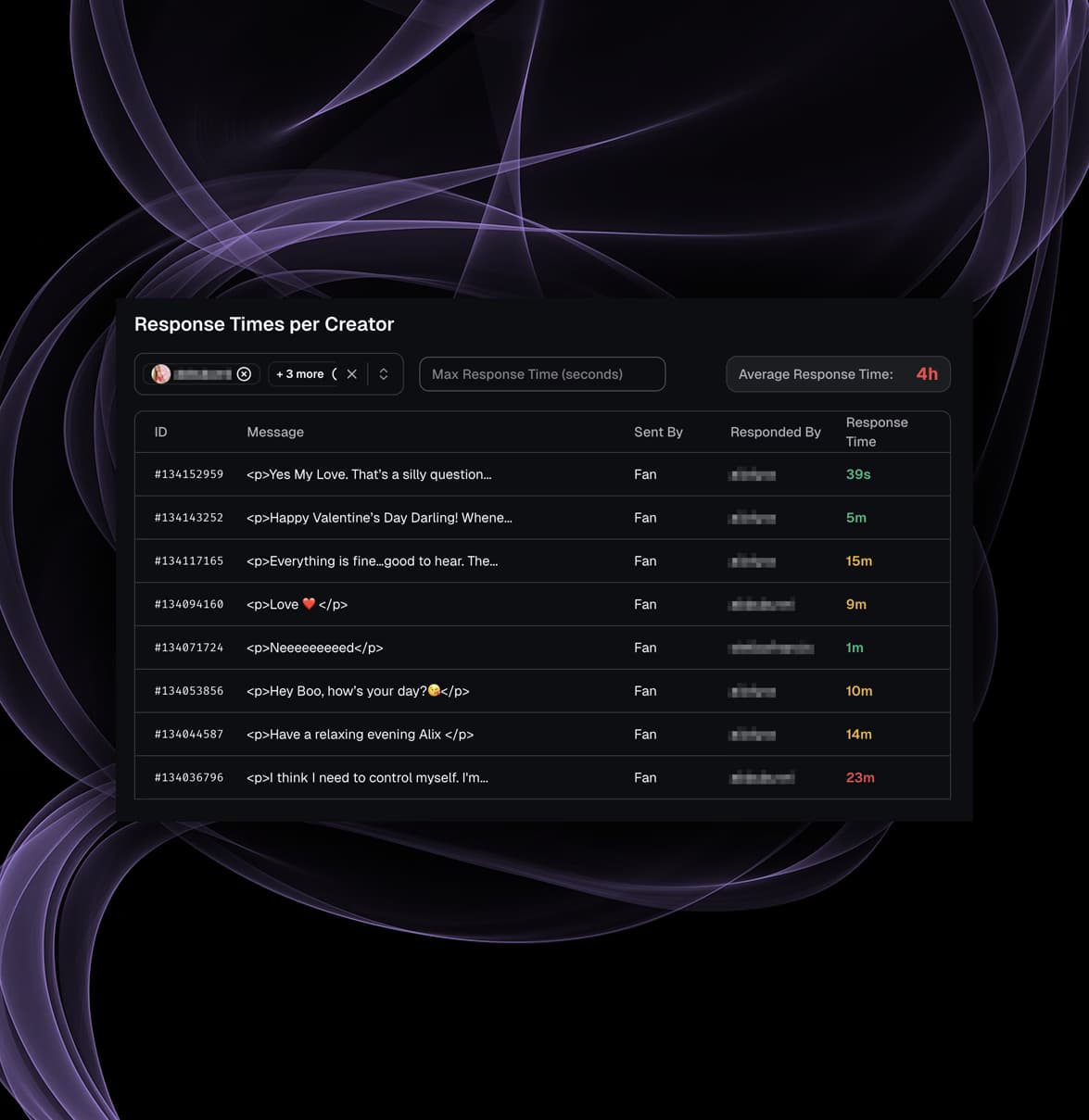
Response Times Per Creator
How fast each chatter replies, and which chatter actually took the reply. Filter by creator, max response time, sender, or responder. One 30-minute delay = one lost $200 PPV. Now you know which chatter, which fan, which message.
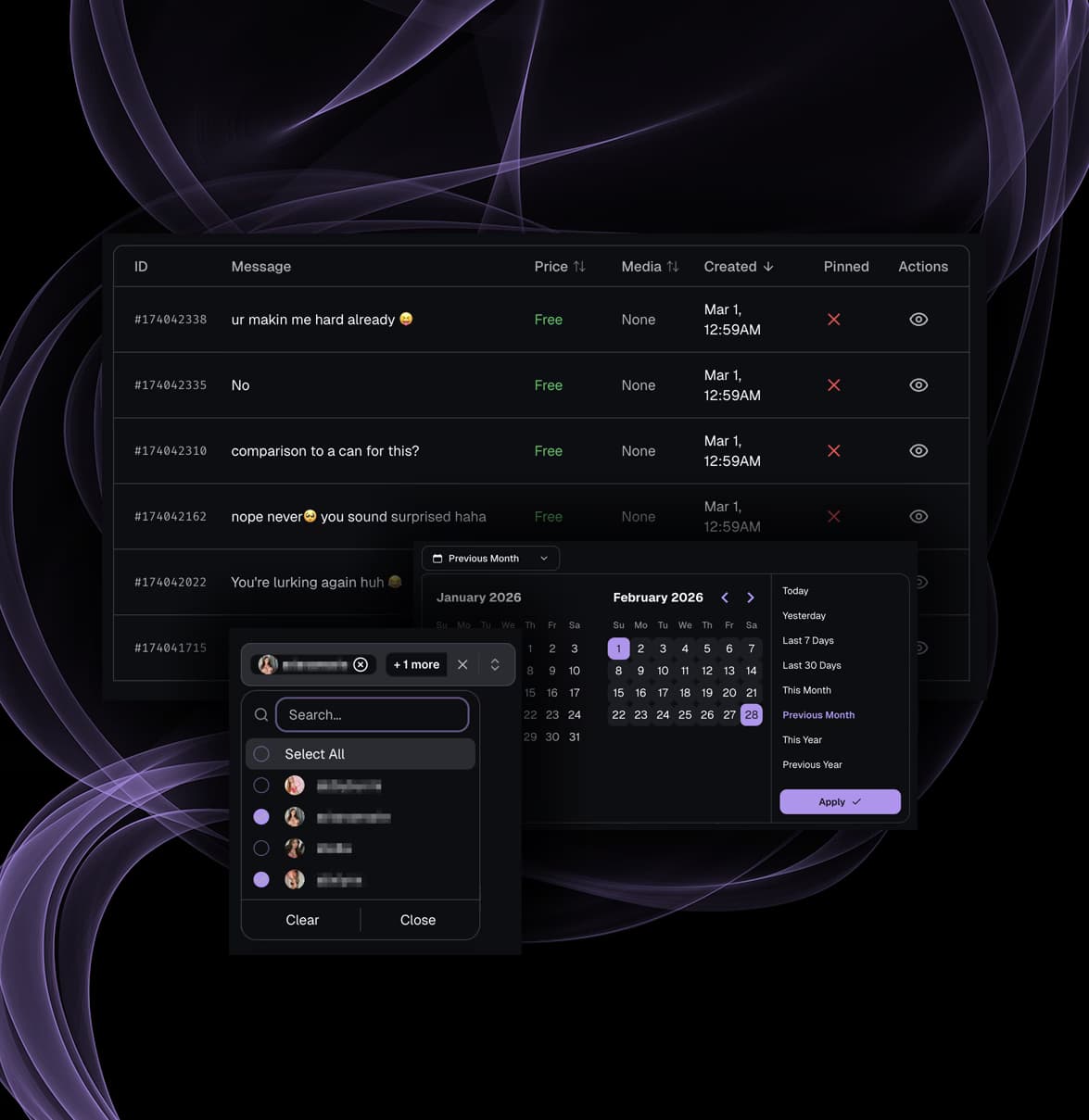
Multi-Creator Filtering & Search
Pick creators, pick fans, pick date ranges. Every chart and table recalculates. Search across thousands of conversations and surface the exact message in seconds — no copy-paste between tools, no "let me get back to you."
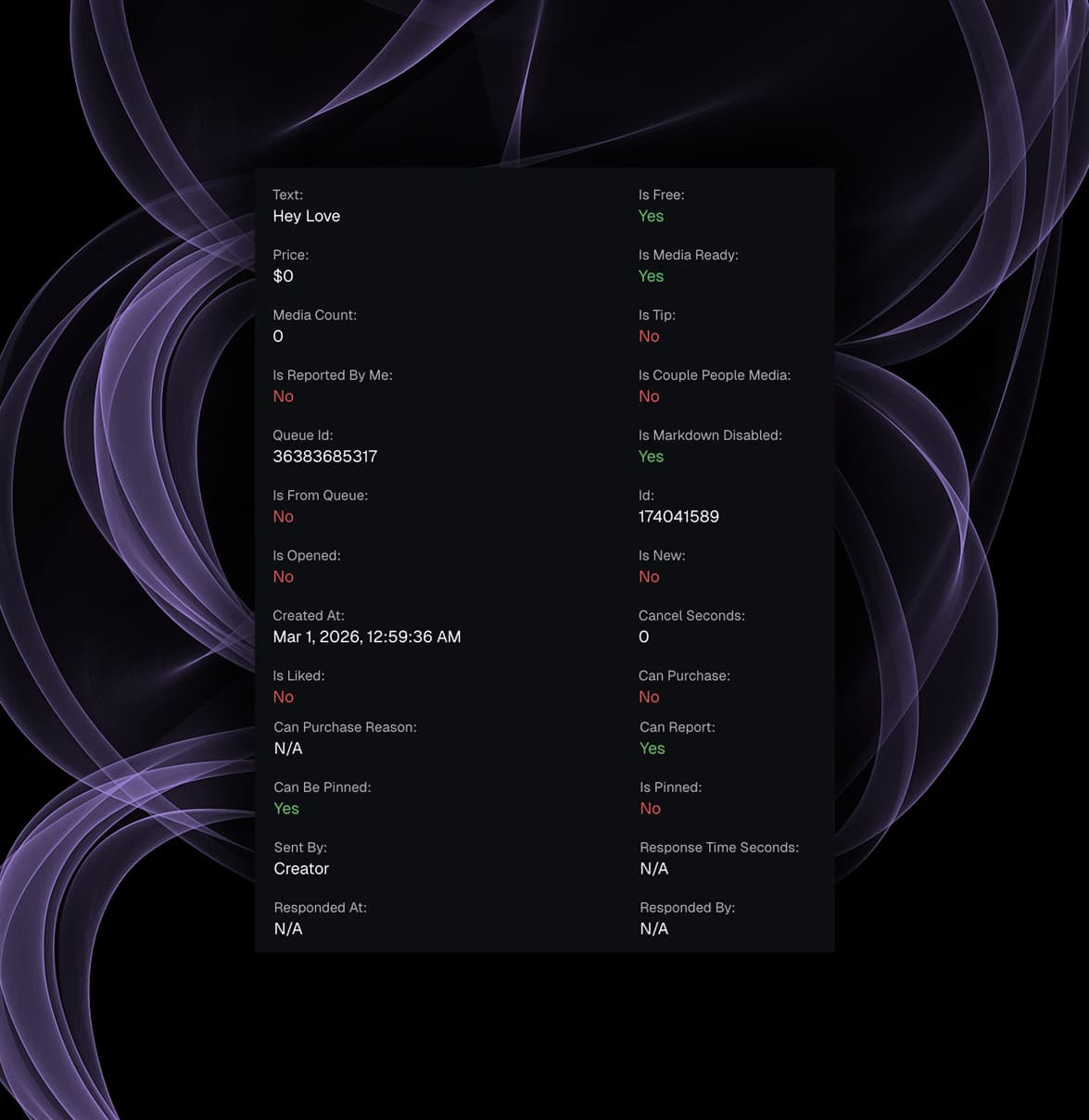
Message Detail Forensics
Click any message: price, media count, tip status, pin state, queue origin, response time in seconds, who replied. Audit a conversation or settle a chatter dispute with receipts — not vibes.
Chat Revenue Breakdown
Revenue from paid messages, PPV, and tips — per creator and per chatter. The metric most agencies ignore — and the one that separates a $20K/month creator from a $200K/month creator with the same fan count.
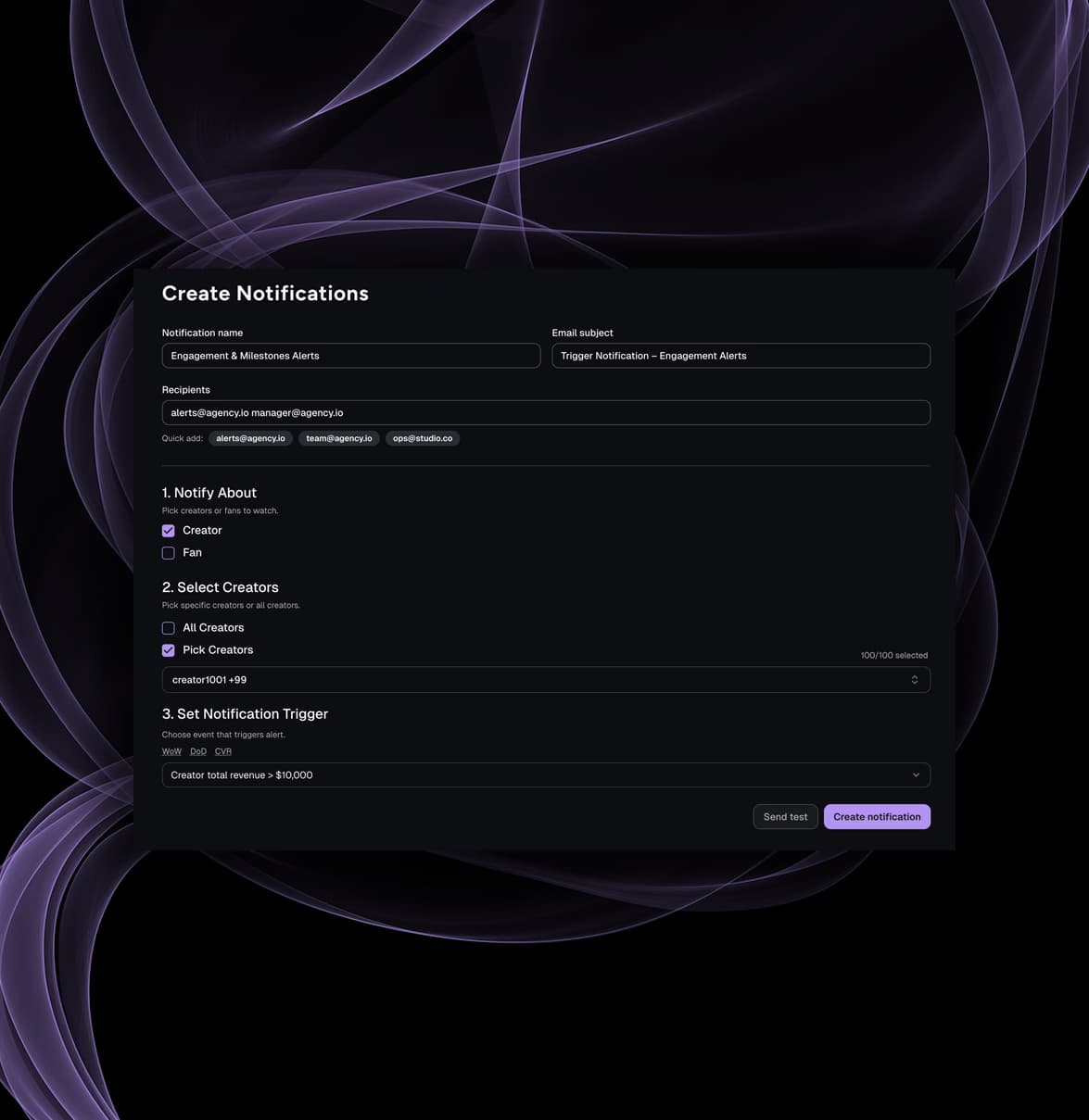
Chat Alerts & Notifications
Alerts for unread piles, response-time SLA breaches, whale activity spikes. Chatters cannot watch every inbox 24/7. They do not have to — revenue-critical conversations stop falling through the cracks at 3 a.m.


What top Fansly chat operations actually measure.
Revenue does not start at checkout — it starts in the conversation. Six workflows the highest-earning Fansly agencies use to turn chat from a cost center into a measurable revenue engine.
Response Time as a Revenue Lever
Faster replies close more sales — the data is unambiguous. Track average response time per chatter, set internal SLAs, and identify the closers who out-convert because they reply in minutes, not hours. Promote them. Coach the rest.
PPV & Paid Message Performance
Which paid messages convert? Which die in the queue? Track price points, open rates, and purchase rates per creator. Double down on the offers that earn — retire the ones that drain chatter hours and never sell.
Mass Messaging Campaign Tracking
Send counts, view rates, revenue per blast. Compare campaigns side by side. Stop guessing which mass-DM template works — measure it. Replicate the winner on the next 50 sends across the roster.
Chatter Performance Scorecards
Who replies fastest. Who closes the most message revenue. Who lets conversations die in the queue. Give chatters data-backed feedback — not vague complaints. Reward closers, coach the middle, replace the ones who cannot move.
Conversation Monetization Audit
Fans who chat daily but never buy. Conversations with high engagement and zero revenue. These are your warmest leads that nobody has asked the right way — yet. Find them. Brief the right chatter. Close the gap.
Multi-Creator Chat Comparison
Compare chat volume, response speed, conversion rate, and message revenue across the full Fansly roster. Find the chat strategies your top performers run. Replicate them across underperformers — same fans, same prices, better follow-through.
Fansly Chat Analytics — Frequently Asked Questions
What Fansly agencies ask before plugging Chat Analytics into their chatter team and mass-messaging workflow.
Your best Fansly revenue conversations are buried in your inbox. Surface them.
Every day your team sends thousands of messages. Some print money. Most don't. AI Chat Analytics surfaces the patterns so chatters spend less time typing — and more time closing.